Why Choose Sodium Pyruvate Solution for Cell Culture?

Time:2026-10-05 Author:Henry
0%

Why Choose Sodium Pyruvate Solution for Cell Culture?

Reliable cell culture often depends on small formulation choices. Sodium Pyruvate Solution provides an additional carbon source that many mammalian cells can use for energy production. It can support cellular metabolism when glucose utilization becomes limited or stressful. This matters during prolonged culture, high-density growth, and recovery after passaging. The benefit is practical. Cells may attach more evenly, maintain healthier morphology, and show improved viability under selected conditions.

Dr. R. Ian Freshney, author of Culture of Animal Cells, states, “The success of cell culture depends on maintaining a controlled environment.” His observation fits Sodium Pyruvate Solution well. The supplement does not work in isolation. Concentration, medium composition, temperature, pH, and cell type all influence the outcome. A solution that helps one line may change metabolism in another. That difference deserves attention.

Small details matter.

In routine work, researchers should confirm sterility, storage conditions, endotoxin specifications, and compatibility with the basal medium. They should also compare cultures with and without pyruvate. This simple control can reveal whether the supplement truly improves growth. It may also expose unwanted effects on metabolic assays, oxygen consumption, or drug-response measurements. The choice is not flawless. More supplement does not always mean better performance. Sodium Pyruvate Solution should be selected through controlled testing, clear documentation, and evidence from the intended cell model. That careful approach supports reproducible results rather than attractive but uncertain claims.
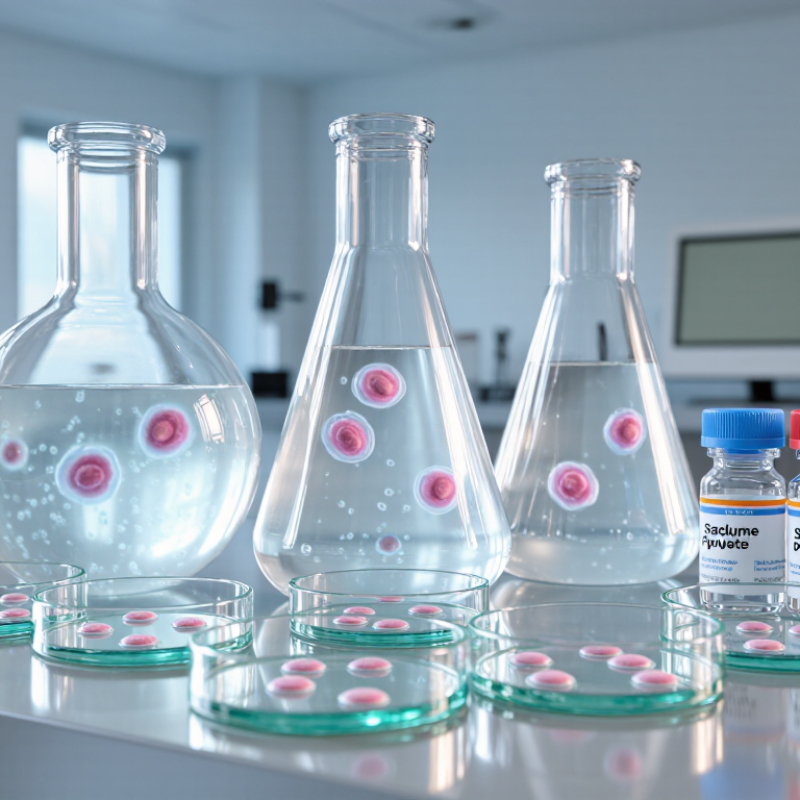
Why Choose Sodium Pyruvate Solution for Cell Culture?

What Is Sodium Pyruvate Solution?

Why Choose Sodium Pyruvate Solution for Cell Culture?

What Is Sodium Pyruvate Solution?

Sodium pyruvate solution is the water-soluble sodium salt of pyruvic acid. It is a three-carbon metabolite formed during glycolysis. In culture media, it can provide an additional carbon source when glucose metabolism becomes limited. It may also help cells manage oxidative stress by reacting with hydrogen peroxide under certain conditions.

Many widely used mammalian cell formulations contain approximately 1 mM sodium pyruvate. This concentration appears frequently in published cell culture protocols and media formulations reviewed in Methods in Molecular Biology. However, 1 mM is not universal. Primary cells, stem cells, and transformed lines may respond differently. A 2023 review in Cytotechnology also highlights how nutrient balance can influence growth, metabolism, and experimental reproducibility. This is where practice becomes less tidy. More pyruvate does not automatically mean healthier cells.

Tips: Check the solution’s concentration, pH, sterility, and storage history before use. For a 100 mL medium at 1 mM, add 0.1 mmol sodium pyruvate, equal to about 11 mg of the anhydrous salt. Protect prepared media from repeated warming. Record passage number and cell density, because these variables can change the apparent effect of pyruvate. Run a matched control without supplementation when the experiment allows it.

How Sodium Pyruvate Supports Cellular Energy Metabolism

Sodium pyruvate solution can provide cultured cells with an additional metabolic fuel. Its main value lies in cellular energy metabolism, not simply in supplementing the medium. Cells can convert pyruvate into acetyl-CoA, which enters the tricarboxylic acid cycle and supports ATP production through mitochondrial respiration. It may also help maintain carbon flow when glucose metabolism becomes strained. Results depend on cell type, medium composition, oxygen levels, and culture density.

In practical cell culture, sodium pyruvate may support cells during rapid growth or mild metabolic stress. It can also influence the balance between glycolysis and oxidative phosphorylation. Some studies suggest pyruvate may reduce oxidative damage by reacting with certain reactive oxygen species. However, this effect is context-dependent. More pyruvate is not always better. Excess supplementation can alter experimental conditions and create misleading results. I would compare matched cultures with and without pyruvate before drawing conclusions.

Tips: Prepare the solution with sterile technique and confirm its concentration before use. Record the supplier’s preparation method, storage temperature, and expiration date. Include untreated controls and monitor cell morphology, viability, and growth rate. A clear medium does not guarantee healthy metabolism. Small changes can matter. Also, avoid assuming one concentration suits every cell line; optimization remains necessary.

Key Benefits in Cell Culture Systems

Why Choose Sodium Pyruvate Solution for Cell Culture?

Sodium pyruvate provides cells with an additional carbon source for energy production. It enters central metabolism and can support ATP generation when glucose utilization becomes limited. Many basal media formulations use approximately 1 mM sodium pyruvate, although the suitable level depends on cell type and experiment design. Its value is practical, not universal. Some fast-growing cells show little improvement when glucose is already abundant.

A second benefit involves oxidative stress. Pyruvate can react with hydrogen peroxide in cell-free systems, potentially reducing oxidative damage under selected conditions. This effect may support cell recovery after thawing, transfection, or extended culture. However, it is not a replacement for controlled oxygen levels or validated antioxidant systems. A 2023 review in Nature Reviews Molecular Cell Biology highlighted how metabolic conditions can reshape cell phenotype. This supports careful media optimization rather than routine supplementation. Grand View Research reported continued growth in the global cell-culture media market, reflecting wider demand for defined and reproducible culture systems.

Tips: Prepare fresh or properly stored solutions. Repeated freeze-thaw cycles may affect consistency. Include a vehicle control, and compare zero, standard, and elevated concentrations. Monitor viability, morphology, pH, and growth rate together. One measurement can mislead. Record passage number and culture density, because pyruvate responses may change during adaptation. Testing remains essential.

Why Choose Sodium Pyruvate Solution for Cell Culture? - Key Benefits in Cell Culture Systems

Data Dimension Sodium Pyruvate Solution Cell-Culture Relevance Practical Consideration
Primary chemical identity Sodium pyruvate; sodium salt of pyruvic acid Provides pyruvate, a central intermediate in cellular energy metabolism Use a cell-culture-grade preparation to minimize impurities and lot-to-lot variation
Molecular formula C3H3NaO3 Defines the composition of the supplemental carbon source Relevant when calculating media preparation and final molar concentration
Molar mass Approximately 110.04 g/mol Supports accurate conversion between mass-based and molar-based formulations Confirm the stated concentration and formulation on the product specification
Common final concentration Often used at approximately 1 mM in mammalian cell-culture media Can supplement basal media when additional pyruvate is desired The optimal level depends on cell type, basal medium, assay design, and study objective
Metabolic role Can be converted to acetyl-CoA through pyruvate dehydrogenase or to lactate through lactate dehydrogenase Connects glycolysis with mitochondrial oxidative metabolism and lactate production Effects may vary with oxygen availability, mitochondrial activity, and cellular metabolic state
Energy-support potential Supplies an additional oxidizable carbon source beyond glucose May support ATP generation and cellular biosynthetic activity in suitable culture conditions It does not replace the need to optimize glucose, glutamine, oxygenation, and other nutrients
Oxidative-stress relevance Pyruvate can react chemically with hydrogen peroxide under suitable conditions May help reduce certain extracellular oxidative challenges in some culture systems This activity is condition-dependent and should not be treated as a universal antioxidant effect
pH and osmolarity impact Adds a small amount of sodium-containing solute when used at typical supplementation levels Helps maintain predictable medium composition when incorporated correctly Excessive supplementation can alter osmolarity or metabolic balance; validate before scale-up
Compatibility Commonly used as a supplement in buffered mammalian cell-culture media Suitable for many adherent and suspension culture workflows when validated Compatibility should be checked for primary cells, sensitive lines, serum-free media, and defined media
Experimental applications Used in routine expansion, metabolism studies, stress models, and assay development Enables investigation of how pyruvate availability influences growth, viability, and metabolism Include pyruvate concentration as a controlled variable in experimental comparisons
Quality-control parameters Typically assessed for identity, concentration, sterility, endotoxin, pH, and appearance Supports reproducible cell-culture performance and reduces avoidable experimental variability Review the certificate of analysis and storage requirements before use
Storage and handling Storage conditions depend on the formulation; light, temperature, and repeated freeze-thaw cycles may affect stability Proper handling helps preserve concentration and sterility during repeated media preparation Follow the supplier’s validated storage instructions and use aseptic technique

Note: Sodium pyruvate can influence cell growth, viability, redox balance, and metabolic readouts differently across cell types and culture conditions. Experimental concentrations should be validated with appropriate controls.

Factors to Consider When Selecting a Sodium Pyruvate Solution

Why Choose Sodium Pyruvate Solution for Cell Culture?

Factors to Consider When Selecting a Sodium Pyruvate Solution

Sodium pyruvate supplies cells with an additional carbon source during culture. It may support energy production when glucose metabolism becomes limiting. The right solution depends on more than its label. In routine mammalian cell culture, I check the required final concentration, usually according to the validated protocol. Many protocols use approximately 1 mM, but that value is not universal. More is not always better.

Sterility and endotoxin control deserve close attention. A solution can look perfectly clear and still affect sensitive cells. Look for documented testing, suitable filtration, and a clearly stated expiration date. Confirm the formulation, pH range, osmolality, and solvent compatibility. These details matter when cells remain in culture for several days. A small shift can change attachment, growth rate, or morphology.

Storage conditions also influence performance. Light and repeated temperature changes may reduce consistency over time. Choose packaging that limits contamination during repeated use. In my experience, recording the opening date is a simple but often missed habit. I once treated stable-looking growth as proof that every reagent was suitable. That assumption was too optimistic. Compare untreated controls with pyruvate-supplemented cultures, and document passage number, medium lot, and observed cell behavior. A reliable choice should fit the cells, workflow, and experimental question, not merely the lowest price.

Why Choose Sodium Pyruvate Solution for Cell Culture?

Sodium pyruvate is commonly added to cell culture media as an additional energy and carbon source. The chart shows the calculated amount of sodium pyruvate required to prepare 1 liter of medium at several final concentrations. Calculations use the molecular weight of sodium pyruvate: 110.09 g/mol.

Factors to consider: Select the final concentration specified by the cell line or medium formulation, confirm the stock concentration and dilution accuracy, and check sterility, pH, osmolarity, storage conditions, and compatibility with the complete culture medium. For a 100 mM stock solution, preparing 1 liter of medium requires 5 mL, 10 mL, 20 mL, or 50 mL of stock to reach 0.5, 1, 2, or 5 mM, respectively.

Best Practices for Storage and Use

Sodium pyruvate solution can support cellular energy metabolism and improve medium flexibility. Yet its value depends heavily on handling. Storage is not a minor detail. Keep unopened solution under the temperature stated in its validated product documentation, commonly refrigerated at 2–8°C. Protect it from strong light. Do not freeze it unless the instructions explicitly permit freezing. Freezing may change solution performance after thawing.

Before use, check the lot label, expiry date, clarity, and container integrity. Use a clean cabinet and sterile pipette tips. Remove only the volume needed for the day. Small aliquots help. Repeated warming and cooling can increase variability, even when the solution looks normal. Warm it gently to room temperature, not in a hot water bath. Never return unused material to the original container. That habit is convenient, but it weakens contamination control.

Add sodium pyruvate at the concentration specified by the cell line protocol. A commonly used concentration is 1 mM, but it should not be treated as universal. Confirm compatibility with basal medium, serum, antibiotics, and the experimental endpoint. Record storage conditions, opening dates, and preparation details in the culture log. If cells respond unexpectedly, review pyruvate handling before changing several variables. I would also question whether the solution was exposed to light or temperature swings. Clear liquid does not always prove ideal performance. Include appropriate controls when comparing supplemented and unsupplemented cultures.

FAQS

What is the main role of sodium pyruvate in cell culture?

It provides cultured cells with an additional metabolic fuel. Cells can convert it into acetyl-CoA for mitochondrial energy production. It is more than a simple medium supplement.

How can sodium pyruvate support ATP production?

Pyruvate can enter the tricarboxylic acid cycle through acetyl-CoA. This process supports mitochondrial respiration and ATP generation. Oxygen availability still matters.

Can sodium pyruvate help during metabolic stress?

It may maintain carbon flow when glucose metabolism becomes strained. Rapidly growing cells may also benefit. The response varies between cell types and culture conditions.

Does sodium pyruvate always reduce oxidative damage?

Not always. Some studies suggest it can react with certain reactive oxygen species. This effect depends on concentration and experimental conditions. More is not automatically better.

What concentration should be used?

A commonly used concentration is 1 mM. It is not universal. Check the cell line protocol and optimize carefully. I would not copy one condition blindly.

How should the solution be stored?

Follow the validated storage instructions. Refrigerated storage at 2–8°C is commonly used. Protect the container from strong light. Avoid freezing unless explicitly permitted.

What should be checked before adding the solution?

Inspect the lot label, expiration date, clarity, and container integrity. Confirm the concentration. A clear liquid is not proof of ideal performance.

How can handling errors affect an experiment?

Repeated warming and cooling may increase variability. Use sterile pipette tips and remove only the daily volume. Do not return leftovers to the original container. Small details matter.

Conclusion

Sodium Pyruvate Solution is a water-soluble supplement commonly added to cell culture media to provide cells with an additional energy substrate. As a key intermediate in cellular metabolism, pyruvate can enter central energy pathways and support ATP production, particularly when cells experience metabolic stress or when glucose availability is limited. Its inclusion may help maintain cell viability, growth, and functional stability across a range of culture systems.

When selecting a Sodium Pyruvate Solution, researchers should consider concentration, sterility, pH compatibility, formulation quality, and suitability for the specific cell type and medium. Proper storage is also essential: the solution should be kept under the recommended conditions, protected from contamination and unnecessary light exposure, and used before its expiration date. Careful preparation, aseptic handling, and consistent dosing help ensure reliable experimental results and minimize variability between cultures.


Henry

Henry

Henry is a dedicated marketing professional with a profound expertise in the company's offerings. With years of experience in the industry, he possesses an impressive understanding of the market dynamics and consumer behaviors that drive success. Henry is committed to sharing his insights through......